Updated November 6, 2026
Step 1: Rule out the billing explanations
- More days: compare the number of days in each billing period.
- Estimated read: look for an estimate label on this bill or the last one.
- Past-due carryover: make sure the amount is for current charges only, not a previous balance.
- Move-in or plan change: check your rate schedule and supplier.
Step 2: Split the change into price and usage
Enter both bills in our comparison tool. It estimates how much of the change came from your price, the weather and everything else. If price dominates, read why bills rise with the same usage. If the "everything else" share is large, keep going below.
Step 3: Do the appliance math
Any device's energy use is its watts, times hours, divided by 1,000. The table uses round illustrative wattages. Check your own device's label, since real use varies widely.
| Device example | Watts | Hours/day | kWh/month | At 17¢ |
|---|---|---|---|---|
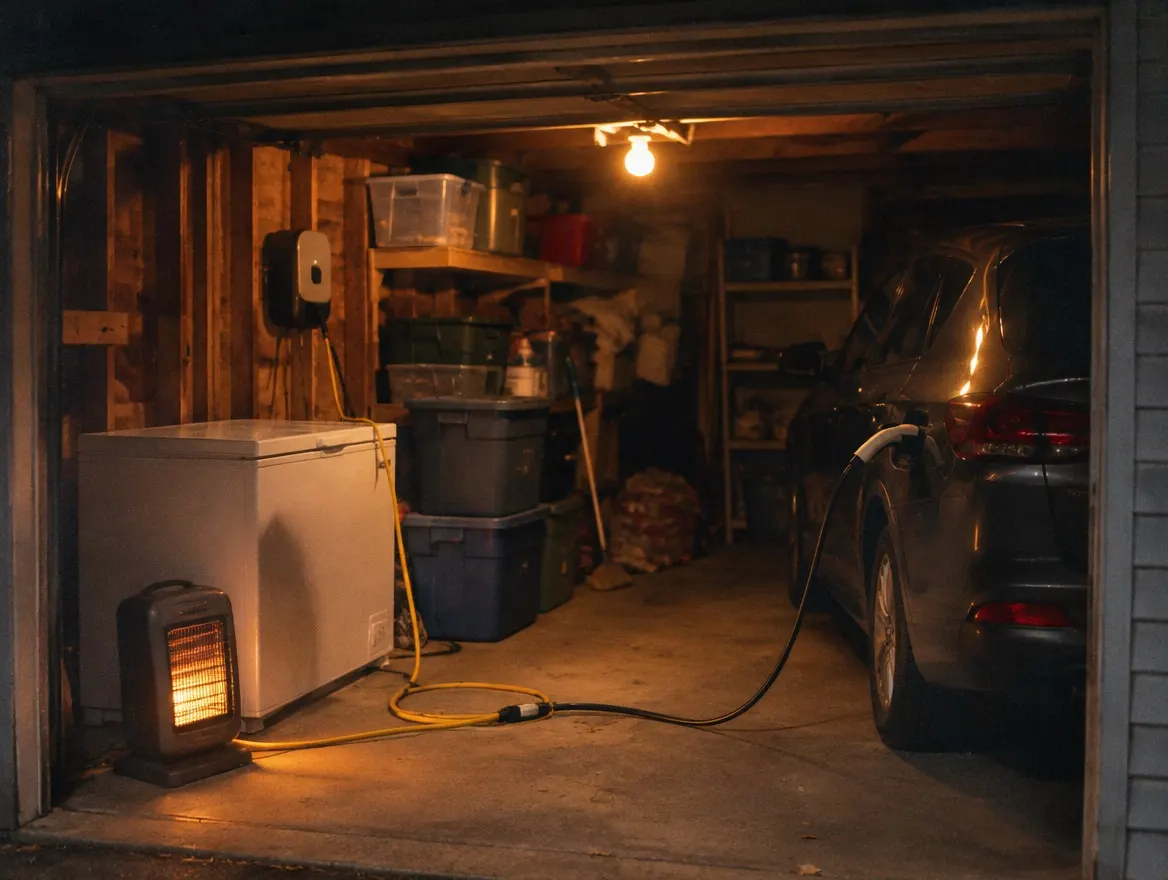
| Space heater | 1,500 | 8 | 360 | $61 |
| Dehumidifier | 500 | 12 | 180 | $31 |
| Pool pump | 1,000 | 8 | 240 | $41 |
| Level 2 EV charging | 7,000 | 1.5 | 315 | $54 |
| Television | 100 | 5 | 15 | $3 |
The pattern is clear: things that heat, cool or charge dominate. Devices that only make light or sound rarely matter unless there are many of them.
Step 4: Look for the usual suspects
- Heat pump backup strips: these can use far more power than the heat pump itself. Thermostat errors, low refrigerant or a stuck setting can keep them on.
- Water heater: an electric unit with a failing element or a leak can run constantly. Hot water leaks are easy to miss.
- Well pump or sump pump: a pump that cycles often may signal a leak or a stuck switch.
- Old second fridge or freezer: failing seals make compressors run far longer.
- New people or habits: a new baby, remote work or a returning student adds laundry, hot water and daytime cooling.
Step 5: Read your meter with everything off
Many smart meters show live usage on their display, or your utility's portal shows hourly data. Note your overnight baseline: a home that never drops below 1 kW while everyone is asleep is using at least 720 kWh a month before anyone wakes up.
To hunt further, switch off one breaker at a time and watch the live reading. If you are not comfortable working at your panel, a licensed electrician can do this for you. Be careful with breakers for medical equipment, sump pumps and freezers.
Step 6: If it still doesn't add up
Meter faults are possible but uncommon, so make them your last suspect. If the main breaker is off and the meter still shows usage, or usage jumped with no change you can find, ask your utility to test the meter and review the account. A sudden, unexplained rise can also point to wiring faults, so stop and call an electrician if you notice burning smells, warm outlets or flickering lights.
If the bill is hard to pay
Call your utility before the due date and ask about payment plans and budget billing. The federal Low Income Home Energy Assistance Program, known as LIHEAP, helps eligible households, and states run it through local agencies.
Common questions
What uses the most electricity in a house?
Usually heating and cooling, followed by water heating and any EV charging. Devices that create heat or run motors for long hours matter far more than lights and electronics.
Can a bad meter cause a high bill?
It is possible but uncommon. Rule out billing periods, estimated reads and appliances first, then ask your utility to test the meter if nothing else explains it.
How can I find out what is using power?
Check hourly data in your utility portal if it has one, watch your overnight baseline, then switch off breakers one at a time or use a plug-in energy monitor for single devices.
Does unplugging chargers make a real difference?
Rarely by much. A phone charger left plugged in uses very little. Look for big loads first, then trim standby use from older electronics and game consoles.
What if I can't afford my bill?
Call your utility before the due date to ask about payment plans. LIHEAP may also help eligible households, and your state's agency can explain how to apply.